A Calm Casebook of Everyday Habits

What shared work on food routines can look like in real life

Scenarios That Matter

Real situations call for real approaches. Below are everyday moments where food choices shape our day and how partnership makes a difference.

Scenario One

Commuting Day: Eating Between Places

You're moving through the day—train, car, office, back again. Breakfast feels rushed. Lunch breaks don't exist. Your body needs fuel, but the usual patterns don't fit.

What matters: Not perfection, but consistency. Portable options that travel well. Understanding timing. Knowing which foods settle easily when eaten on the move.

Our approach: We clarify what "portable" actually means for your schedule. Together, we build a small list of real options you'll reach for. You observe what your body needs when eating isn't a ritual—it's just survival. We adapt as your routine changes.

Scenario Two

Desk Lunch: Structure Without Perfection

Lunch at a desk means continuous work. There's no break for breathing. You finish and barely remember eating. By 3pm, you're reaching for the nearest snack because real hunger hasn't registered.

What matters: Creating a boundary between eating and working. Building a simple structure without overcomplicating it. Avoiding the grazing pattern that follows mindless eating.

Our approach: We talk about what "lunch" could look like in a workday—not a perfect meal, but enough to feel satisfied after. You observe how your hunger changes with attention. We adapt the structure if it feels rigid. The goal: you eat, you notice, you're calmer for the afternoon.

Scenario Three

Late Meeting Evening: Returning Home Without Guilt

The meeting runs long. You missed dinner. You're tired and hungry. Home is chaotic. The fridge feels both empty and overwhelming. You want to eat but don't want to overthink.

What matters: Simplicity in tired moments. Not eating past the point of comfort. Coming back to steadiness after disruption. Choosing without shame.

Our approach: We build a "tired dinner" list together—things you can make or assemble in minutes. You observe what feels right when you're exhausted. We talk about wind-down: what helps your body settle after stress and work. No guilt. No catching up. Just returning to baseline.

Roles in the Partnership

This work isn't one-sided. It's a dialogue. Here's what each person brings.

Your Role

  • • Observe your own patterns—how you eat, when, why
  • • Be honest about constraints (time, money, preference, stress)
  • • Try what we explore together
  • • Notice what works and what doesn't
  • • Speak up when something feels wrong
  • • Trust the process, even when progress feels slow

Our Role

  • • Ask the right questions to understand your reality
  • • Offer information without overwhelming
  • • Support—not judge—whatever patterns emerge
  • • Adapt plans when they're not fitting
  • • Celebrate small, real shifts
  • • Keep perspective: this is about steadiness, not perfection
Important: This work is advisory and educational. It is not medical treatment, diagnosis, or therapy. We support everyday food choices and routine building. If you have health concerns, medical conditions, or are under medical care, please consult your doctor or healthcare provider first.

The Process: How We Adapt Together

Change doesn't happen all at once. It unfolds through dialogue, observation, small shifts, and steadiness. Here's how we work together:

1
Clarify

Understand your real situation—what matters, what's hard, what's possible.

2
Observe

Notice what's happening now. No judgment. Just data about your patterns.

3
Adjust

Make small, real changes together. Test what works for your life.

4
Support

Stay steady. Navigate obstacles. Keep perspective. You're not alone.

5
Review

Reflect on what's shifted. Plan next steps. Steady progress.

Practice: Everyday UK Scenes

Food is part of real life. Here's what partnership looks like in everyday moments across the UK.

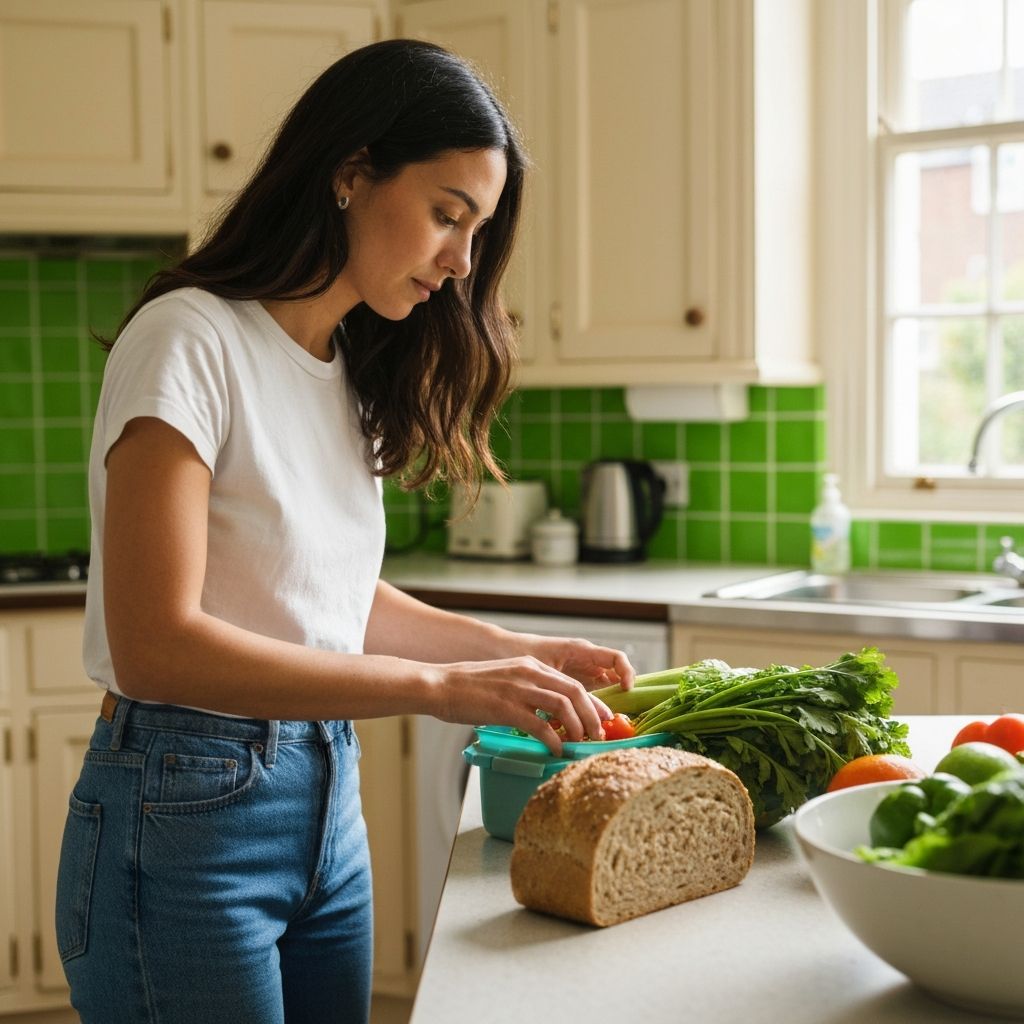
Hands preparing a portable lunch at a kitchen counter with fresh vegetables and bread

Planning & Preparation

The day starts with choice. A few minutes at the counter—what fits your day? What will feel good in an hour? This quiet moment shapes everything that follows. No pressure. Just planning.

A person writing a shopping list at a kitchen table with a cup of tea

Intentional Shopping

A list is a conversation with yourself. What do you actually eat? What settles well? What's realistic to cook? We build together—not from ideals, but from your real patterns. Then you choose.

A person choosing items in a UK supermarket aisle, reaching for produce and packaged goods

Real Choices in the Aisle

Shopping is where reality meets intention. You know what works. You know your constraints. The aisle is yours. We've talked about what matters—nutrition, budget, time, taste. You decide.

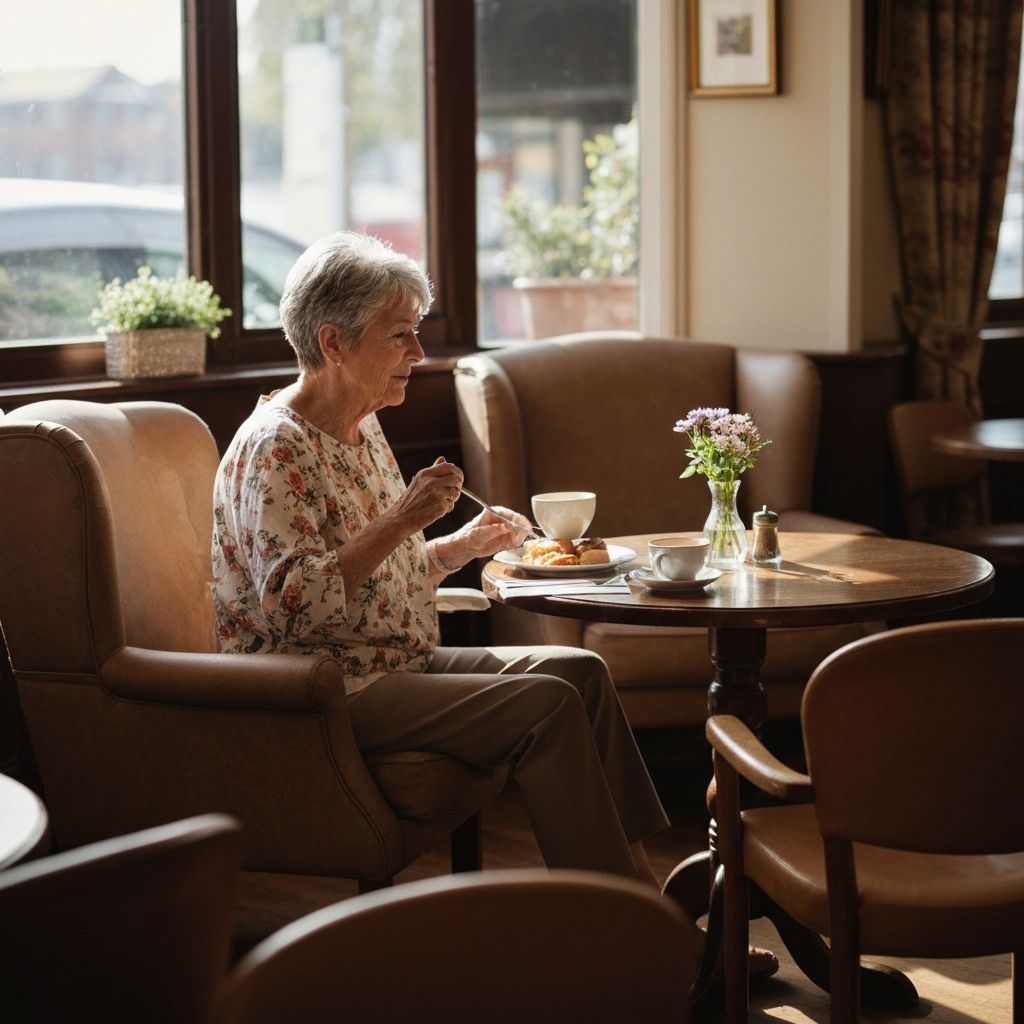
A person enjoying a relaxed lunch in a UK café with a meal and hot drink

Eating with Ease

Lunch doesn't have to be perfect. It just needs to feel right. A moment to pause, eat, notice. This is where routine becomes ritual—not rigid, but grounding. Calm choices, calm body.

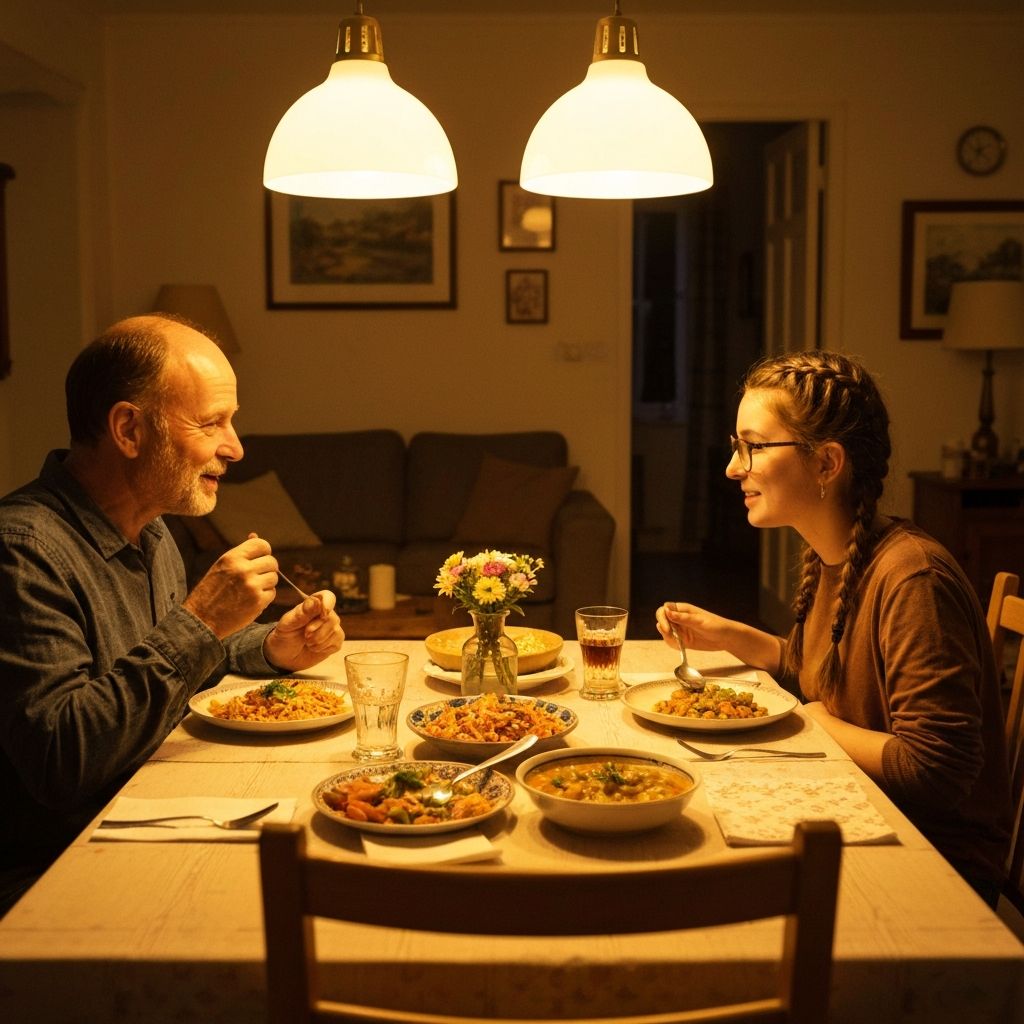
Two people sharing dinner at a dining table with a homemade meal in a warm home setting

Shared Meals, Shared Space

Food connects us. Whether you're cooking or eating with others, this is where steadiness becomes community. No isolation. No extremes. Just shared rhythm and mutual care.

About Likensg

Likensg is an advisory platform dedicated to everyday nutrition conversations built on partnership. We believe that meaningful change around food and eating routines comes through dialogue, not dogma.

What we do: We support people in building steady, sustainable food routines that fit real life. Our approach emphasises understanding your constraints, choices, and goals—then adapting together as life changes.

What we don't do: We don't diagnose, treat, or prescribe. We don't promise quick results or extreme transformation. We don't focus on weight loss, body image, or medical outcomes. This is about clarity, calm, and consistency in everyday eating.

Our foundation: This work is grounded in the belief that you know your body best. Our role is to listen, explore patterns with you, offer perspective, and support steady progress. Nutrition work is shared work—responsibility on both sides, respect for your reality, and trust in slow, real change.

We're based in Aberdeen, United Kingdom, and available for advisory consultation.

Reflection Questions

Before we work together, consider these starting points. There are no right answers—just honest reflection about where you are now.

Question 1: What does a realistic weekday look like for you? (Time, schedule, stress, interruptions)
Question 2: When do you struggle most with food choices? (Specific times, situations, or feelings)
Question 3: What would steady eating routines mean for you? (What would change? How would it feel different?)
Question 4: What's worked before? (Past patterns, approaches, or support that helped, even briefly)
Question 5: What do you need from an advisor? (Perspective, accountability, permission, direction, something else?)

Contact & Request

This form is used for informational newsletter requests and general enquiries. We do not collect personal data beyond what you provide here, and your information is used solely for advisory communication.
Thank you. We've received your request and will be in touch soon.

Company Contact Details